
On this page
Carolina Place at a glance
| Where | Bounded by Market St., Wallace Park, Gibson Ave., Wrightsville Ave. and S. 18th St. (NRHP) |
| Historic status | National Register historic district, listed August 31, 1992 |
| Size | 46 acres with 337 contributing buildings |
| Built | About 1906 to 1941 |
| Styles | Queen Anne, Colonial and Classical Revival, Bungalow/Craftsman |
| Biggest gutter risks | Aging fascia, exposed rafter tails, heavy leaf fall |
Wilmington's first streetcar suburb
Carolina Place was Wilmington's first planned streetcar suburb, developed from about 1906 to 1941. Its National Register district, listed in 1992, covers 46 acres with 337 contributing buildings, mostly houses, in Queen Anne, Colonial Revival, Classical Revival and Bungalow/Craftsman styles. Wallace Park sits within its boundaries.
It is a compact neighborhood of mostly modest houses. Many are bungalows with low-pitched roofs, deep overhangs, exposed rafter tails and front porches. Others are taller Queen Anne and revival houses with more complex roofs.
What this means for gutters
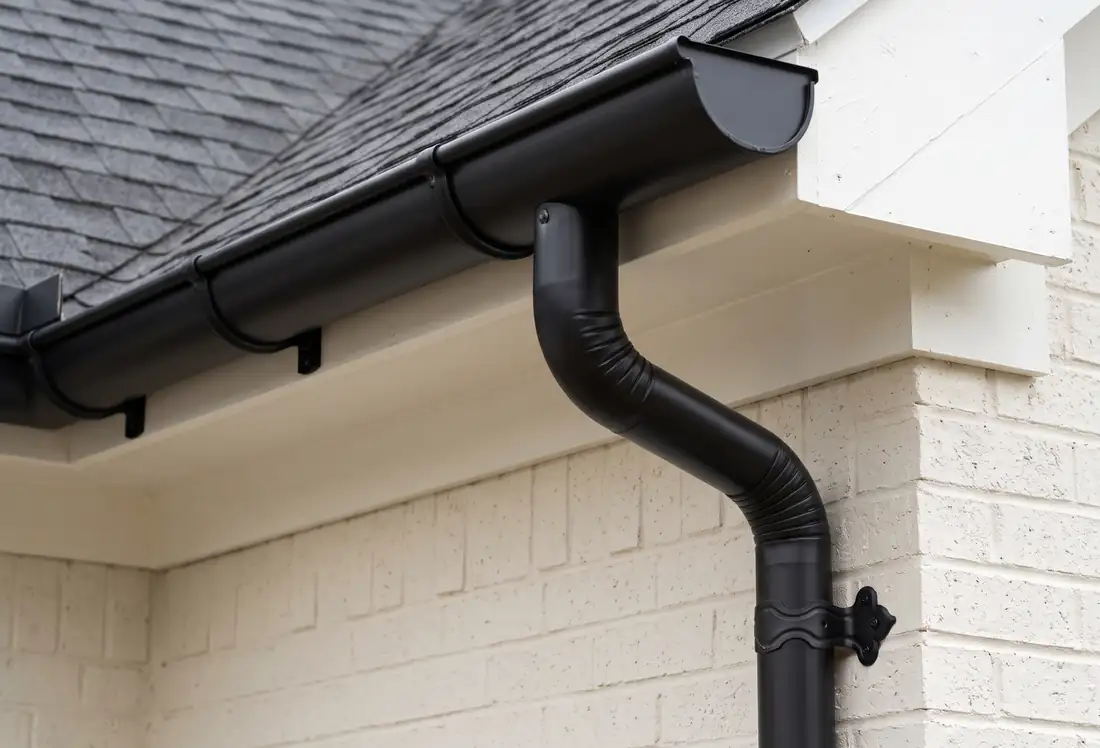
Exposed rafter tails. Many Craftsman bungalows have no continuous fascia board, just rafter ends. Gutters there need brackets fixed to the roof deck or a carefully added board, and half-round profiles often look right. See half-round gutters.
Low-pitched roofs and deep eaves. Water leaves low-slope roofs slowly but in volume during heavy rain. Downspouts need to be generous, and porch roofs need their own drainage.
Old wood. After a century of rain, fascia, soffits and rafter tails often have rot, especially where gutters overflowed for years. Expect wood repair before new gutters. See fascia and soffit.
Complex roofs. On Queen Anne houses, valleys and turret roofs funnel water onto small sections of gutter. Those corners may need larger gutters or extra outlets.
Historic review
Carolina Place is listed as a National Register district on the city's historic districts page. The city states that National Register listing alone does not bring Historic Preservation Commission review unless a property is also within a local district. If you are unsure whether your property falls inside a local district or overlay, check with the city before work.
Trees and debris
Mature oaks and other street trees shade much of the neighborhood. Spring brings oak leaf drop and catkins; storms bring twigs and moss. Regular cleaning, or a fine mesh guard on sound gutters, keeps overflow off the old wood. In Wilmington, gutter debris must not go into the street or storm drains under the city's debris ordinance.
Rain, crawl spaces and drainage
Houses of this age generally sit on raised foundations. Wilmington averages 57.61 inches of rain a year according to the National Weather Service, and water discharged at the foundation can end up under the house. Extending downspouts onto lawn or beds is usually the simplest fix. See downspout drainage and your foundation.
Gutter questions Carolina Place owners ask
What does "streetcar suburb" mean for my house?
Carolina Place was laid out for residents who rode the streetcar to downtown. Lots are modest and houses sit fairly close together. For gutters, that means downspouts often discharge near a neighbor's lot line, and side-yard drainage needs thought. Directing water to the front or rear yard, or into a rain garden, avoids sending it next door.
Can I keep my original gutters?
Very few houses here still have original gutters. Many have had several replacements, often mixed sectional aluminum and steel. If yours are original or early, they may be galvanized steel or built into the cornice; both can sometimes be repaired, but rust-through usually means replacement.
Do I need a gutter on my porch roof?
Usually yes. Low-slope porch roofs collect water from the main roof and drop it onto the front steps. A short gutter with a downspout at the corner of the porch keeps the steps dry and stops water splashing onto porch floors and column bases, which are often wood and prone to rot.
Terms worth knowing before you call
- Fascia: the board along the roof edge where gutters attach
- Soffit: the underside of the overhang, often vented
- Rafter tail: the exposed end of a roof rafter on a bungalow
- Drip edge: metal flashing at the roof edge that directs water into the gutter
- Miter: a corner joint in a gutter, sealed or soldered
- Outlet: the hole in the gutter bottom where the downspout connects
- Hidden hanger: a bracket that clips inside the gutter and screws into the fascia
Common gutter jobs in Carolina Place
| Common problem | Usual fix |
|---|---|
| Exposed rafter tails with failing gutters | Bracket-hung half-round or an added board |
| Sectional gutters leaking at seams | Seamless replacement |
| Water under a raised house | Extend downspouts onto lawn |
| Moss and leaves in troughs | Twice-yearly cleaning or fine mesh |
Before you call
It helps to have a few details ready when you call about a house in Carolina Place:
- Whether the eaves have exposed rafters or a fascia board
- When the gutters were last replaced
- Where water collects around the foundation
Nearby
Neighboring areas: Carolina Heights, Brookwood, downtown and Sunset Park.