
On this page
Downtown Wilmington at a glance
| Where | The original city on the east bank of the Cape Fear River |
| Historic status | Wilmington Historic District, on the National Register since 1974, enlarged 2003 |
| Local districts | Several local historic districts and overlays where exterior work may need approval |
| Housing | 19th- and early 20th-century houses, many with ornate cornices and porches |
| Biggest gutter risks | Rotted trim behind old gutters, built-in gutters, matching period details |
The old city
Downtown Wilmington is the city's original grid along the Cape Fear River. The Wilmington Historic District was listed on the National Register of Historic Places in 1974, with a boundary increase in 2003, and its architecture ranges across periods, with Queen Anne and Craftsman among the styles named in the listing. The Wilmington visitors bureau describes the city as having the largest historic district of any urban area in the state.
That age shows at the roof edge. Many houses have had gutters added, removed and replaced over a century. Some have built-in or box gutters set into the cornice. Many have fascia and trim that has been painted over for decades, sometimes hiding rot.
Historic district rules
Wilmington distinguishes National Register districts from local historic districts. The city's historic districts page explains that properties in National Register districts are not subject to Historic Preservation Commission review unless they also sit inside a local district boundary. Downtown has several local districts and overlays, including residential, mixed-use, theater and commercial districts.
Inside those local districts, exterior changes may need a Certificate of Appropriateness. The city's COA review table has separate entries for installing gutters and downspouts that match the trim color, those that do not, and for roofing over built-in gutters or installing gutters that obscure or change architectural detail on the façade. Check with the city's historic preservation staff before ordering materials. A contractor who works downtown should know the process.
What downtown houses usually need
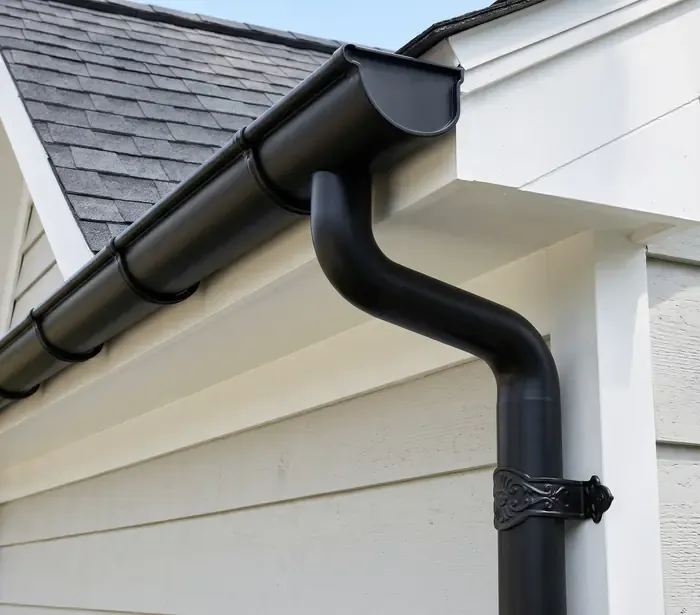
Half-round and copper. On many older houses, a half-round gutter on brackets, in aluminum or copper, suits the house better than a boxy K-style.
Trim repair first. Expect to replace soft fascia and crown moulding before hanging new gutters. Replacing deteriorated trim with material that matches the original in detail and color is one of the items in the city's COA table. See fascia and soffit.
Built-in gutters. Where a cornice has a built-in gutter, relining it may be more appropriate than covering it with a hung gutter. Ask for an assessment before deciding.
Downspout placement. Lots are tight and many houses sit close to the sidewalk. Downspouts need to discharge where water will not run across walkways or into a neighbor's crawl space.
Trees and the river
Downtown streets are lined with mature trees, including live oaks, which the city values highly; Wilmington has been a Tree City USA since 2002, WHQR reports. Oak leaves, catkins and Spanish moss fill gutters in spring. Within a local historic district, the city requires a Certificate of Appropriateness and a tree removal permit to remove a tree, so gutter guards and regular cleaning are usually the practical answer.
Storms
The city's official weather records began downtown in 1871, recorded by the US Army Signal Corps, according to the National Weather Service. Those records include Wilmington's highest gust, 135 mph in Hurricane Helene in 1958. Gutters on old houses, often fastened with spikes into old wood, are vulnerable. Close-spaced brackets into sound wood make a difference.
Gutters and the river
Low-lying blocks near the riverfront can flood at high tide and in storms. Gutters move roof water; they do not affect river or tidal flooding. Their job downtown is to keep roof water off old masonry, porches and crawl spaces.
Gutter questions downtown owners ask
Should a downtown house have K-style or half-round gutters?
It depends on when the house was built and what its eave looks like. Most 19th-century and early 20th-century houses downtown were built before K-style (ogee) gutters became standard after World War II. A half-round gutter hung on exposed brackets, with round downspouts and a matching outlet, usually reads as original. Where a cornice has crown moulding, a K-style gutter can hide the profile, which is one reason the city's review table has an entry for gutters that obscure architectural detail.
What is a built-in gutter, and why does it matter?
A built-in gutter (also called a box gutter or Yankee gutter) is a trough formed inside the cornice and lined with metal such as terne-coated steel or copper. From the street you see only the cornice. When the lining fails, water runs into the wall and ceiling rather than over the edge, so leaks show up as stains indoors. Relining with new sheet metal or a membrane keeps the cornice intact; hanging a new gutter in front and roofing over the old one changes the look and is a reviewable change in local districts.
How do downspouts work on a house that sits on the sidewalk?
Many downtown houses have little or no front yard. Downspouts there are usually placed at the sides or rear, with the discharge piped to a side yard, a rear garden or, where the city allows, a curb outlet. Discharging across a brick sidewalk creates a slip hazard and stains masonry.
Materials that suit the old city
| Material | Where it fits downtown |
|---|---|
| Copper half-round | Landmark houses, churches, masonry buildings; lasts decades, forms a green patina |
| Aluminum half-round | Frame houses where copper is outside the budget; can be painted to match trim |
| Painted K-style aluminum | Later houses and additions where K-style matches the period |
| Relined built-in gutters | Houses with original box gutters in the cornice |
Galvanized steel was common historically. Near the river, salt-laden air and humidity shorten its life, so aluminum and copper are the usual replacements.
Common gutter jobs in Downtown Wilmington
| Common problem | Usual fix |
|---|---|
| Old spiked gutters on a Victorian house | Rehang on brackets or hidden hangers after trim repair |
| Built-in cornice gutter leaking | Reline the built-in gutter rather than cover it |
| Downspout spilling onto a brick sidewalk | Reroute to a side yard or bed |
| Gutters clogged with oak catkins | Spring cleaning; consider mesh guards |
Before you call
It helps to have a few details ready when you call about a house in Downtown Wilmington:
- Whether the property is in a local historic district or overlay
- The age of the house and any recent roof work
- Photos of the cornice or eave detail you want kept
Nearby
Neighboring areas: Carolina Place, Carolina Heights, Sunset Park and, across the river, Belville and Leland.